Insight
AI Sales Automation: Fix Quotes, Bids and Proposals
The pipeline is fine and the deals are real. What is broken is the two to six weeks between "they asked for a price" and "we sent a number." Here is how to automate that middle.
September 2, 2026 · Cogya · 7 min read
Search "AI sales automation" and you'll find the same three things: outreach sequencers, lead scoring, and CRM data entry. All of it assumes your sales problem is at the top of the funnel — that you need more conversations.
For a large number of operators, that assumption is simply wrong. The pipeline is fine. The deals are real. What's broken is the middle: the two to six weeks between "they asked us for a price" and "we sent them a number." That's where the deals go cold, and almost nobody writes about automating it.
This article is about that middle.
What the market means by "AI sales automation"
The category as sold today covers roughly four things: drafting and sending outbound sequences, scoring inbound leads, enriching CRM records, and summarising calls. Useful work, and for a high-volume SaaS motion with thousands of low-value leads, often the right work.
But it's built for a specific shape of business — many small deals, short cycles, standardised product. If you sell projects, supply contracts, installations, staffing or anything quoted per-job, that shape doesn't describe you. Your constraint isn't conversation volume. It's how long it takes to produce a defensible number, and how many senior people it consumes on the way.
Where the time actually goes in an operator sales cycle
Trace a single deal from inbound request to submitted quote and you tend to find the same four sinks.
Reading the request. The requirement arrives as a PDF, an RFQ portal export, an email chain, or a spec sheet with fifty line items. Somebody has to read it and work out what's actually being asked for.
Assembling the response. Pulling pricing from suppliers, matching line items to catalogue entries, checking compliance requirements, formatting to whatever template the buyer demands.
Waiting on inputs. Supplier pricing is the classic one. Days or weeks pass while a coordinator chases quotes by email.
Senior review. The one person who can sanity-check margin becomes the queue everything sits behind.
None of that is outreach. All of it is unstructured document work plus repeated expert judgement — which is exactly the material AI handles well.
Four automation targets that aren't outreach
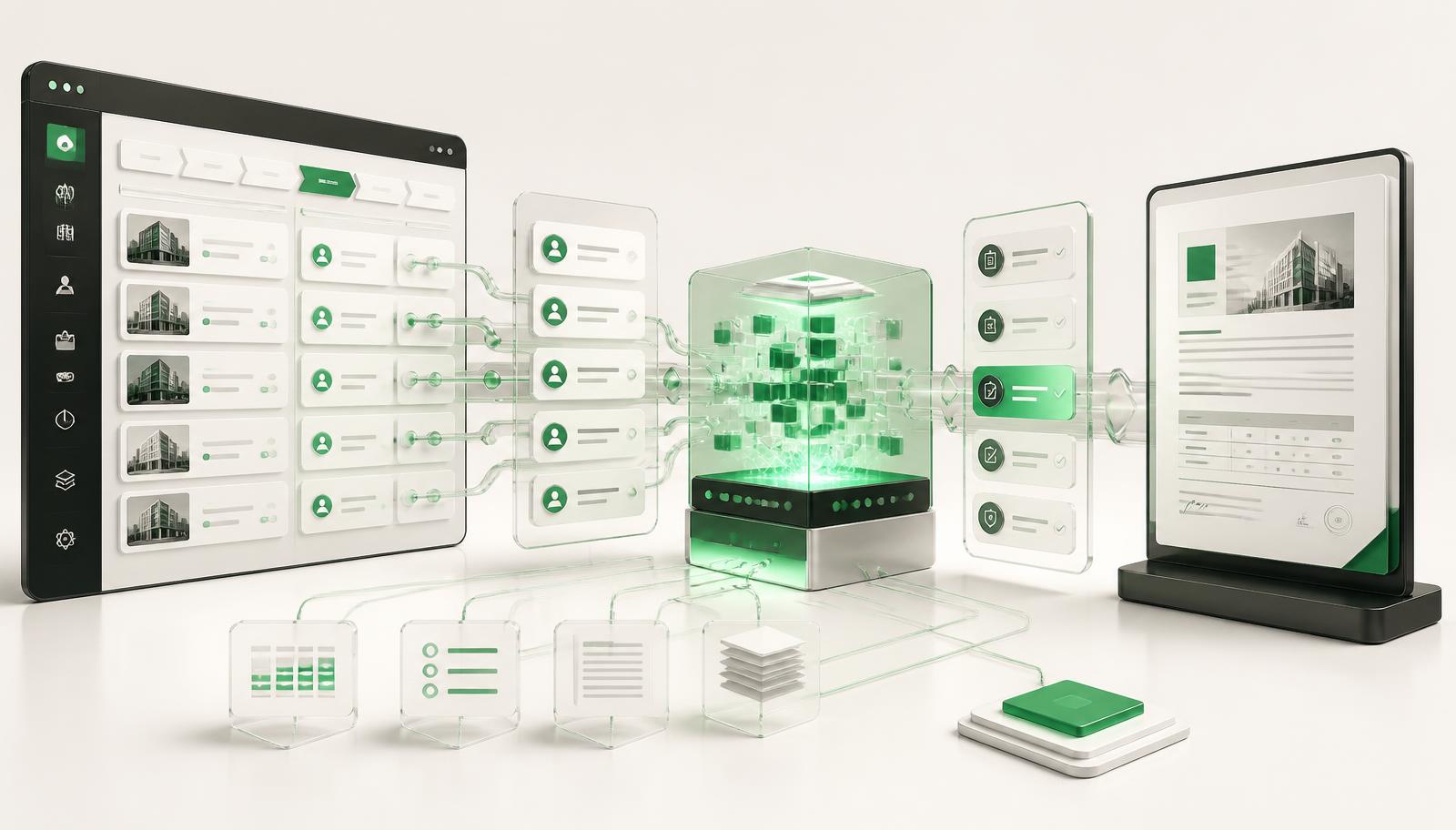
1. Inbound requirement triage. Extract structured line items, quantities, deadlines and compliance requirements from whatever format the request arrived in. This is the highest-leverage single step, because everything downstream is currently blocked on a human reading a document.
2. Response assembly. Match extracted requirements against your catalogue, historical pricing and prior bids; assemble a draft response in the buyer's required format. Not to send unreviewed — to hand a senior reviewer something 80% built instead of blank.
3. Supplier and cost input collection. Automate the chase, the collation and the validation of incoming pricing against what was requested. Discrepancy detection here is unglamorous and pays immediately.
4. Qualification from unstructured inbound. Not lead scoring on form fields — reading the actual request and flagging the ones you shouldn't bid on. Declining faster is a real gain when senior time is the constraint.
What this looks like with real numbers
A healthcare procurement and medical supply company operating across the United States and Saudi Arabia had precisely this problem. RFQ responses took 24–48 hours, and 3–5 days at peak. Large bid packages ran 4–6 weeks and pulled in six to eight people. Supplier pricing collection added another 2–3 weeks on top. There was no reliable view of which suppliers performed or how past bids had gone.
The system built around it handles RFQ processing and document organisation, supplier pricing automation and validation, compliance-support checks, and analytics over historical bids and supplier performance.
What moved: RFQ response went to 1–2 hours. Bid preparation went to 2–3 weeks. Supplier pricing collection went to 5–7 days. Annual bid capacity rose 40%, RFQ conversion improved 25%, bid win performance improved 20%, pricing errors fell 70%, non-compliance incidents fell 80%, and supplier pricing discrepancies fell 90%. (Full case study)
Note the shape of that result. Conversion and win rate improved not because the sales messaging changed, but because responses arrived faster and contained fewer errors.
The same pattern shows up in staffing, where the "quote" is a shortlist. A France-based recruitment agency specialising in cybersecurity engineers took 3–5 days to match candidates to a role and 30–40 minutes to prepare each candidate profile. Matching now runs at about three hours and profile preparation at seconds, with deal win rate up roughly 30%. (Full case study)
Two different industries, one mechanism: the response to a buyer's request stopped being a manual document assembly job.
What not to automate in sales
The price itself. Extraction, matching, assembly and validation are automatable. The final commercial judgement on margin, risk and relationship is not, and a system that quietly sets prices is a system nobody senior will trust or use.
The relationship. Automated outreach that pretends to be personal is the fastest available way to damage a brand that sells on credibility. If you sell six-figure projects to people who will meet you in person, don't.
Qualification you can't explain. If the system declines a request, someone must be able to see why. Unexplainable rejection in a sales process is a revenue leak you cannot audit.
How to sequence it
Start with extraction. It's the most contained build, it unblocks the most downstream work, and it produces immediately checkable output — a human compares the extracted line items against the source document and sees in thirty seconds whether it worked.
Then add assembly, so reviewers get a draft rather than a blank template. Then add validation and discrepancy detection. Then, and only then, analytics over historical bids — because that layer is only worth having once the underlying data is being captured in a structured form, which the first three steps are what create.
Sequenced that way, each step pays for itself and the last one becomes a genuine data asset: a record of what you bid, what you won, and which suppliers actually delivered.
The honest version
AI sales automation, as marketed, will help you contact more people. That's valuable if contact volume is your constraint. Most operators we work with are constrained somewhere else entirely — by the cost, in senior hours, of answering a single serious request well.
If that describes your business, the leverage isn't in the outreach layer. It's in the two weeks between the request and the number. Working out which of the two you're actually dealing with is the diagnosis worth running first, and it's the starting point for any custom AI development engagement worth doing.